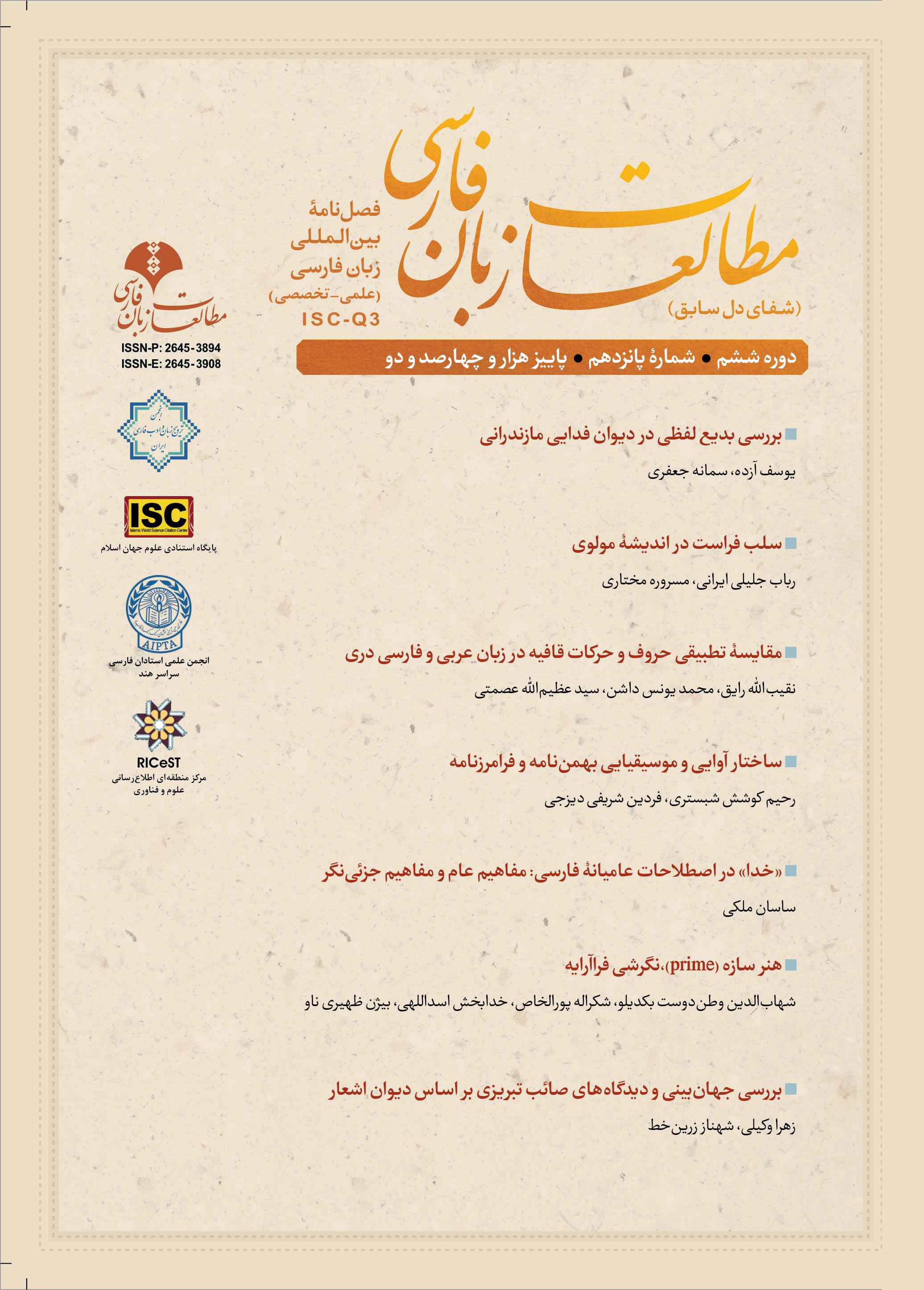
فصل‌نامۀ بین المللی علمی تخصصی مطالعات زبان فارسی ISC

فصل‌نامۀ بین المللی علمی تخصصی مطالعات زبان فارسی ISC

ساختار آوایی و موسیقایی بهمن نامه و فرامرزنامه

نوع مقاله : مقاله پژوهشی

نویسندگان
1 دانشجوی دکتری زبان و ادبیات فارسی، دانشگاه ارومیه، ارومیه، ایران(نویسنده مسئول).
2 دانشیار گروه زبان و ادبیات فارسی، دانشگاه ارومیه، ارومیه، ایران
10.22034/jmzf.2024.435932.1175
چکیده
در پژوهش‌های علمی و زیباشناختی، از نتایج مهم سبک‌شناسی تعیین ارزش واقعی یک اثر است. براین اساس سبک منظومه‌های حماسی در ادبیات فارسی همواره از سوی پژوهشگران مورد توجه قرارگرفته است و در پژوهش‌های بسیاری به منظومه‌های حماسی بعد از شاهنامه پرداخته‌اند. به‌طوری‌که مطالعه و تحقیق در ساختار زبانی گویندگان ـ که یکی از عوامل شناخت و بررسی سبک خاص یک دوره است ـ به ما کمک می‌کند تا با ویژگی‌های خاص زبانی موجود در هر دوره آشنا شویم و به درک صحیح و جامعی از معانی نهفته در کلام شعرا برسیم. موسیقی شعر ـ که یکی از جنبه‌های ساختار زبانی است ـ در شعر اهمیت زیادی دارد. مجموعه عواملی که سبب ایجاد موسیقی در شعر می‌شوند، تعداد زیادی از شاخص‌های زبانی و معنایی است که در سراسر شعر سایه افکنده و تحول زیادی در شعر ایجاد می‌کنند، از قبیل موسیقی حروف و کلمات، انواع جملات و معانی نهفته در آن‌ها هستند و همچنین هر‌یک از اوزان شعری دارای موسیقی خاصی است و بسته به محتوا و حالت عاطفی خاص آن شعر متفاوت است. این مقاله به شیوة مطالعات کتابخانه‌ای و تحلیلی به بررسی عوامل ایجاد موسیقی و آهنگ خاص شعر حماسی در بهمن‌نامه و مقایسۀ آن با فرامرزنامه پرداخته است. مشخص شد که سرایندگان هر دو منظومه، در به‌کارگیری فرایندهای آوایی و موسیقایی موفق عمل کرده‌اند و توانسته‌اند آثار خود را در این زمینه به زبان حماسی معیار نزدیک کنند.
کلیدواژه‌ها

عنوان مقاله English

Phonetic and musical structure of Bahmannameh and Faramaraznameh

نویسندگان English

Fardin SHarifi Dizaji 1
Rahim Koshesh SHabestari 2
1 PhD student of Persian language and literature, Urmia University, Urmia, Iran (corresponding author).
2 Associate Professor, Department of Persian Language and Literature, Urmia University, Urmia, Iran
چکیده English

Phonetic and musical structure of Bahmannameh and Faramaraznameh
 
Rahim Koushesh Shabestari[1], Fardin Sharifi Dizaji[2]
 

Introduction

Today, in the light of linguistic studies, it has been determined: "which is the axis of all evolutions of poetry, language and the relationships of language components" (Shafi'i Kodkani, 2009: 27). Language can be considered a mental system and mind and language are closely related to each other. Shafi'i considers "language and thought to be two sides of the same coin". (Ibid.: 27)
One of the levels of stylistics is the language level, which is divided into phonetic, lexical and syntactic levels. At the phonetic level, the text of a work is examined in terms of musical elements, external music, side music, spiritual music, as well as general issues related to pronunciation. In this research, from the linguistic level only the phonetic level of the two Bahmannameh and Faramaraznameh systems has been taken into consideration in order to know the characteristics of the epic language and determine what the phonetic and musical structure is like in them.
Which of these two have been more successful in using phonetic processes compared to each other?
 

Research Methodology

This article, in the manner of library and analytical studies, has investigated the factors of creating music and the special song of epic poetry in them.
 

Discuss

Both systems are limited or omitted in terms of prosodic weight.
side music:
  One of the factors of music is the section in the poem, the most important effects of which are rhymes and Radif, which play an effective role in raising the musical aspect of the poem and "arousing the reader's emotions and feelings." (Fayaz Menesh, 1384: 180).
In the examination of the rhymes ending with "Ah", it was found that in both systems, most of the words are of the noun type, which somehow fit the syntactic logic of the epic language.
Excessive repetition of rhymes and defects of rhymes is one of their weaknesses. Also, they do not enjoy the topic of "unity in diversity", which is one of the basic roles of rhyme from the point of view of Shafi'i, which leads to a kind of aesthetic pleasure in poetry. (Shafi'i Kodkani, 1391: 76) By examining the lines, there are more Radif in Bahmannameh and less in Farmarznameh, and the types of Radif in Bahmannameh in order of high frequency are: pronouns, letters, nouns, adjectives, and adverbs, in Farmarznameh; Pronoun, letter and noun.
Inner music
All kinds of puns, repetitions and phonemes that are obtained from the combination of words and sounds are some of the prominent features of this music. The composers of both systems have been able to use them to some extent in producing epic songs of their works.
Spiritual music
The deepest part of music is poetry. Adherence to similarity and contrast are two examples of these industries. "Contrast is one of the important linguistic components, the imaginative part of a text, which makes possible what is intellectually impossible" (Ghomlaghi and Salamat, 2021: 215) in which both industries have a high frequency.
 

Conclusion

The epic type, which is one of the oldest literary types, has a special language that is referred to as epic language. The results of the surveys showed that their weight and song are epic.
In the field of using rhymes, they do not have an acceptable variety due to a lot of repetition, and there are also rhyme defects in them. They have used short and simple lines that are suitable for epic stories. But the author of Bahman Nameh has paid more attention to the topic of Radif. In the field of inner and spiritual music, the composers have used these characteristics almost equally to bring themselves closer to the language of the epic standard. In general, they have been successful in this part of the phonetic index.


[1]. Associate Professor, Department of Persian Language and Literature, Urmia University, Urmia, Iran (corresponding author).
r.k.shabestari@urmia.ac.ir
[2]. PhD student of Persian language and literature, Urmia University, Urmia, Iran.
sharyfyfardyn@gmail.com
Received date: 1402/10/08 (2032/12/29)           Accepted date: 1402/12/19 (2024/03/09)


کلیدواژه‌ها English

Keywords: Phonetic structure
Stylistics
Epic language
Bahmanname
Faramarzname
  1. کتاب‌شناسی

    کتاب‌ها

    1. ایرانشاه، ابن ابی الخیر (1370)، بهمن‌نامه، به کوشش رحیم عفیفی، تهران: انتشارات علمی و فرهنگی.
    2. حق‌شناس، محمد‌علی (1369)، آواشناسی، تهران: آگاه.
    3. دهخدا، علی‌اکبر (1377)، لغت‌نامه، زیر نظر محمدمعین و سید جعفر شهیدی، تهران: دانشگاه تهران.
    4. راستگو، سید محمد (1382)، هنر سخن‌آرایی، تهران: سمت.
    5. روزبه، محمد (1381)، ادبیات معاصر ایران(شعر)،تهران: روزگار.
    6. شمیسا، سیروس (1376)، انواع ادبی، چاپ پنجم، تهران: فردوس.
    7. ...........، ......... (1375)، بدیع، تهران: میترا.
    8. ..........،......... (1374)، کلیات سبک‌شناسی، تهران: فردوس.
    9. ...........،.......(1386)، نگاهی تازه به بدیع، تهران: میترا.
    10. شفیعی کدکنی، محمدرضا (1391)، موسیقی شعر، تهران: آگاه.
    11. ..........................، .................. (1387)، ادوار شعر فارسی، تهران: سخن.
    12. فرامرزنامه بزرگ (1394)، به کوشش ماریولین فان زوتفن و ابوالفضل خطیبی، تهران: سخن.
    13. کاردگر، یحیی (1396)، فن بدیع در زبان فارسی، تهران: صدای معاصر.
    14. گرگانی، محمدحسین شمس‌العلما (1377)، ابداع البدایع، به اهتمام حسین جعفری، تبریز: احرار.
    15. محسنی، احمد (1382)، ردیف و موسیقی شعر، مشهد: دانشگاه فردوسی.
    16. ملاح، حسینعلی (1367)، پیوند موسیقی و شعر، تهران: فضا
    17. ناتل خانلری، پرویز (1399)، تاریخ زبان فارسی، چاپ یازدهم، تهران: فرهنگ نشر نو.
    18. وحیدیان کامیار، تقی (1379)، بدیع از دیدگاه زیباشناسی، تهران: دوستان.
    19. همایی، جلال‌الدین (1377)، فنون بلاغت و صناعات ادبی، تهران: نشر هما.

    مقاله‌ها

    1. خالقی مطلق، جلال (1369)، «پیرامون وزن شاهنامه»، مجلۀ ایران‌شناسی، شمارۀ 5، صص 48 تا 63.
    2. دادجو، دُرّه (1386)، «قافیه از نظرگاه موسیقایی با توجه به قافیه در شعر حافظ»، نامۀ فرهنگستان، شمارۀ 33، صص 63-73
    3. ذاکری، گیتا و همکاران (1396)، «آوا و معنا در شاهنامه»، مجلۀ شعر‌پژوهی (بوستان ادب)، دورۀ 9، شمارۀ 1، صص 98-120.
    4. ذاکر الحسینی، محسن (1377)، «پساوندان شاهنامه»، در نامواره دکتر محمود افشار، به کوشش ایرج افشار و محمد رسول دریاگشت، تهران، بنیاد موقوفات دکتر محمود افشار، صص 5987-6018.
    5. شهبازی، اصغر و ملک ثابت، مهدی (1391)، «الگوی بررسی زبان حماسی»، نشریة پژوهش زبان و ادبیات فارسی، دورۀ 10، شمارۀ 24، صص 143-179.
    6. فیّاض‌منش، پرند (1384)، «نگاهی دیگر به موسیقی شعر و پیوند آن با موضوع تخیّل و احساسات شاعرانه»، پژوهش زبان و ادبیات فارسی، دورۀ 3، شمارۀ 4، صص 163-186.
    7. قُملاقی، فتانه و سلامت باویل، لطیفه (1399)، «زیبایی شناسی آرایه‌های ادبی در بهشت گمشدة جان میلتون و دیوان رودکی سمرقندی»، فصلنامة علمی تخصصی مطالعات زبان فارسی (شفای دل سابق)، سال سوم، شمارۀ 6، صص 205-228.
    8. کامران، ماشاالله (1383)، «حافظ و قواعد ردیف و قافیه»، ماهنامۀ حافظ، شمارۀ 8، صص 41-45.
    9. ناتل خانلری، پرویز (1347)، «زبان شعر»، مجلۀ سخن، دورۀ 18. شمارۀ 6. ص 593
    10. نظری چروده، احمدرضا و نظری چروده، معصومه (1397)، «بررسی اشعار نادر نادرپور از منظر فرمالیسم روسی»، فصلنامۀ علمی-تخصصی مطالعات زبان فارسی (شفای دل سابق)، سال دوم، شمارۀ 3، صص 143-180.

  • تاریخ دریافت 08 دی 1402
  • تاریخ بازنگری 13 اسفند 1402
  • تاریخ پذیرش 19 اسفند 1402