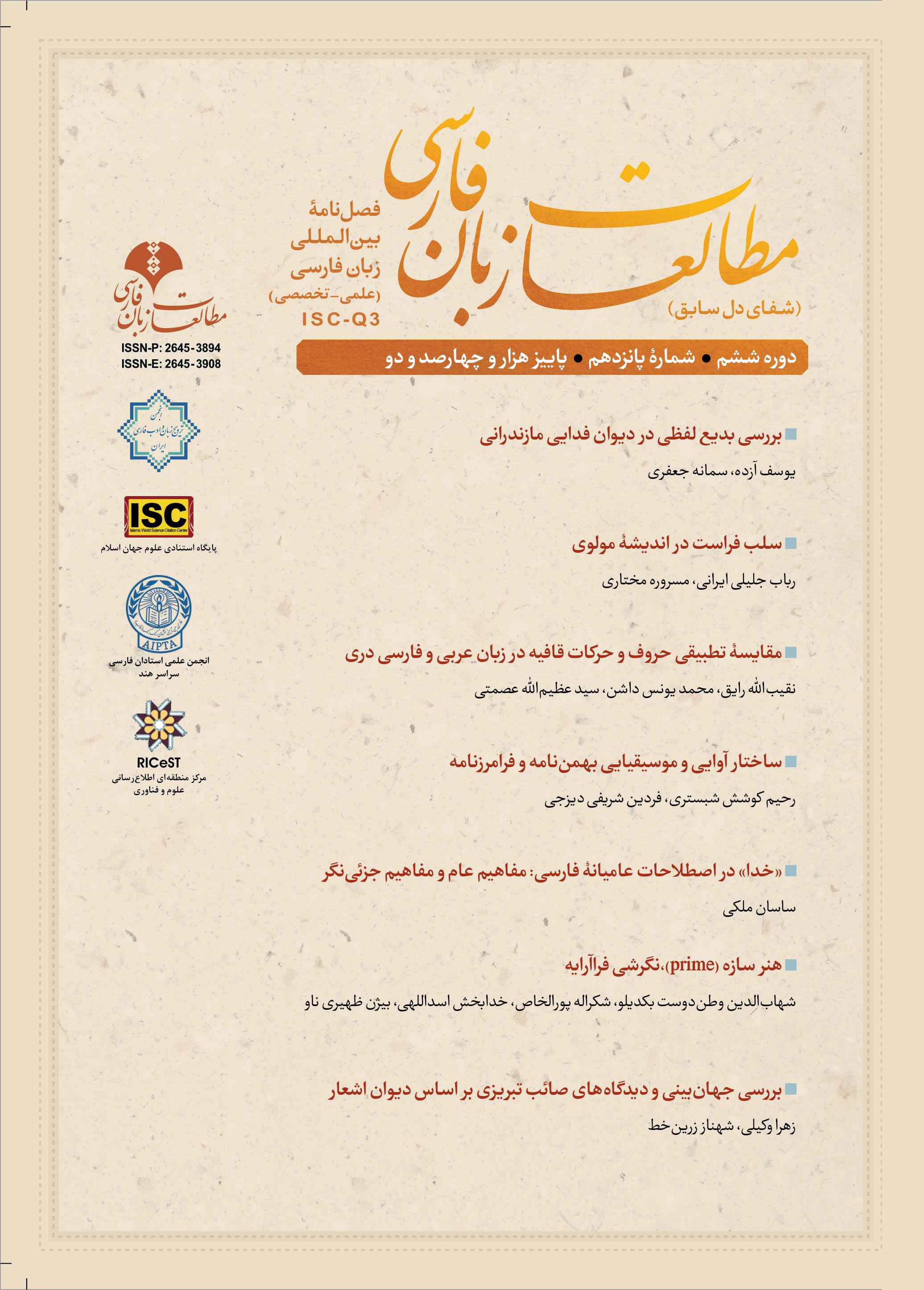
فصل‌نامۀ بین المللی علمی تخصصی مطالعات زبان فارسی ISC

فصل‌نامۀ بین المللی علمی تخصصی مطالعات زبان فارسی ISC

«خدا» در اصطلاحات عامیانۀ فارسی: مفاهیم عام و مفاهیم جزئی‌نگر

نوع مقاله : مقاله پژوهشی

نویسنده
استادیار گروه زبان و ادبیات انگلیسی، دانشکده ادبیات و علوم انسانی، دانشگاه ملایر، ملایر، ایران.
10.22034/jmzf.2024.427238.1167
چکیده
زبان عامیانه، از گونه‌های غیررسمی زبان است که از واقعیت‌های زندگی مردم سرچشمه می‌گیرد. این‌گونه از زبان، دارای مؤلفه‌های مختلفی است و یکی از مؤلفه‌های آن، اصطلاحات عامیانه هستند. هدف از این پژوهش توصیفی ـ تحلیلی، بررسی مفاهیم عام و مفاهیم جزئی‌نگر در اصطلاحات عامیانۀ شامل واژۀ «خدا» است. برای این هدف، اصطلاحات عامیانۀ شامل واژۀ «خدا» و شواهد ادبی کاربرد آن‌ها را از فرهنگ فارسی عامیانۀ نجفی (1387) استخراج کردیم و به دسته‌بندی مفهومی آن‌ها پرداختیم. یافته‌ها نشان داد که اصطلاحات مذکور، در سطح عام، بر مفاهیم «تأکید»، «امیدواری»، «حمایت»، «حسادت»، «تکبّر»، «لطف و مرحمت»، «احتمال»، «مسئولیت‌ناپذیری»، «زمان»، «فرصت»، «قدرت»، «شدت»، «آگاه‌سازی» و «ظلم» دلالت دارند و بیشتر اصطلاحات با توجه به بافت کاربرد خود، جزئیاتی منحصربه‌فرد از یک مفهوم عام را صورت‌بندی می‌کنند. یکی از یافته‌های قابل توجه پژوهش حاضر این است که با استفاده از برخی اصطلاحات شامل واژۀ «خدا»، امکان مفهوم‌سازی جزئی‌نگرانه مفهوم عام «زمان» به‌صورت «بی‌نهایت» و « نامعلوم» وجود دارد. یافتۀ اخیر به نتایج پژوهش‌های پیشین در زبان فارسی می‌افزاید که در آن‌ها، زمان در قالب استعاره‌های مفهومی «مکان»، «شیء»، «انسان» و «ظرف» تحلیل‌شده بود. در‌مجموع از مباحث  مطرح‌شده می‌توان این نتیجه را گرفت که اصطلاحات عامیانه، صرفاً عبارت‌هایی برای بیان کلیات برخی مفاهیم انتزاعی نیستند؛ بلکه با توجه به بافت کاربردشان، جزئیاتی منحصربه‌فرد از مفاهیم عام را بیان می‌کنند؛ به‌گونه‌ای که اگر از عبارت‌های غیر اصطلاحی برای بیان جزئیاتی استفاده شود که در اصطلاحات به‌نوعی فشرده‌شده‌اند، به درازگویی و پیچیده‌گویی دچار خواهیم شد.
کلیدواژه‌ها

عنوان مقاله English

"God" in Persian slang terms: general concepts and specific concepts

نویسنده English

Sasan Maleki
Assistant Professor, Department of English Language and Literature, Faculty of Literature and Humanities, Malayer University, Malayer, Iran.
چکیده English

 
"God" in Persian slang terms: general concepts and specific concepts
Sasan Maleki[1]
 
  Abstract
Vernacular is one of the informal types of language that originates from the realities of people's lives. This type of language has different components and one of its components is slang terms. The purpose of this descriptive-analytical research is to investigate general concepts and detailed concepts in popular terms including the word "God". For this purpose, we extracted slang terms including the word "God" and literary evidence of their use from Najafi's Persian slang dictionary (1387) and classified them conceptually. The findings showed that the mentioned terms, on a general level, refer to the concepts of "emphasis", "hope", "support", "jealousy", "arrogance", "mercy", "probability", "irresponsibility". , "time", "opportunity", "power", "intensity", "awareness" and "oppression" are implied and most terms, according to the context of their use, formulate unique details of a general concept. One of the remarkable findings of the current research is that by using some terms including the word "God", it is possible to conceptualize the general concept of "time" in the form of "infinity" and "unknown". The recent finding adds to the results of previous studies in the Persian language, in which "time" was analyzed in the form of conceptual metaphors of "place", "object", "person", and "container". In general, it can be concluded from the discussed topics that slang terms are not just phrases to express the generality of some abstract concepts, but they express unique details of general concepts according to the context of their use; In such a way that if non-idioms are used to express details that are somehow compressed in terms, we will end up talking long and complicated.
 

Introduction

Slang terms are one of the components of the slang language. Idioms, from a linguistic point of view, are unconventional categories, and their unconventionality is due to the fact that unlike conventional language expressions, the concept of an idiom is different from the literal meanings of its components. For example, the term "taking someone's head" means "talking too much and for this reason, hurting someone" and apparently, there is no connection between the words that make up this term and its general meaning.
 
Statement of the problem and research questions
The current research is based on this general consideration that some concepts are compressed in some way in linguistic terms and the terms, according to the context of their use, express dimensions beyond a general concept in a detailed way. The questions of this research are:
1) slang terms including the word "God", in general, which abstract concepts do they imply?
2) What details of a general concept do slang terms including the word "God" express in each context?
 

Research Methodology

In this descriptive-analytical research, folk idioms including the word "God" and the literary evidence of their use were extracted from the Persian folk culture of Najafi (1387) and analyzed at two levels, general and detailed.
 

Discuss

In the present study, it was first discussed that linguistic terms are considered non-combinable phenomena from the perspective of formal linguistics, but from the perspective of cognitive linguistics, they are motivated by the mechanisms of metaphor, permission and conventional knowledge. Then, the issue of conventionality of formal and substantive terms and terms were discussed and then, popular terms including the word "God" were analyzed on two general and detailed levels based on the literary evidence of their use.
 

Conclusion

In response to the first question of the research, the conclusion was reached that in colloquial Persian, terms including the word "God" generally refer to the concepts of "emphasis", "hope", "support", "jealousy", "arrogance", " Mercy, possibility, irresponsibility, time, opportunity, strength, intensity, awareness, and oppression.
In response to the second question of the research, it was concluded that except for the 2 essential terms "(that) God knows" and "(of) God is unaware" and the formal term "God + unpleasant name", the rest of the terms have unique details. They express individual and beyond general concepts according to the context of their use.
From all the topics discussed, it can be concluded that slang terms are not just phrases to express the generality of some abstract concepts, but according to the context of their use, they express details beyond the general concepts and if non-idioms are to be used to express those details that are somehow compressed in terms, then we will end up talking long and complicated.


[1]. Assistant Professor, Department of English Language and Literature, Malayer University, Malayer, Iran.
sassanmaleki@yahoo.com
 
Received date: 1402/05/06 (2023/07/28)         Accepted date: 1403/11/07 (2024/01/27)
 

کلیدواژه‌ها English

God
Colloquial Persian
General Concepts
Detailed Concepts
  1. کتاب‌شناسی

    کتاب‌ها

    1. آل­احمد، جلال (1331)، زن زیادی، تهران: [بدون ناشر].
    2. .............، ........ (1340نون والقلم، تهران: کتاب زمان.
    3. .............، ........ (1346)، نفرین زمین، تهران: نیل.
    4. .............، ........ (1356)، پنج داستان، تهران: رواق.
    5. ...............، ....... (1360سنگی بر گوری، تهران: رواق.
    6. استانکو، زاهاریا (1350)، پابرهنه­ها، مترجم، احمد شاملو، تهران: کتاب

     زمان.

    1. بابامقدم، رضا (1348)، اسب، تهران: انتشارات صفی­علیشاه.
    2. بهرامی، مهین (1358) الف، «حاج بارک ‌الله»، نامۀ کانون نویسندگان ایران.
    3. .............، ......... (1358) ب، «سقاخانه آینه»، مجله کتاب جمعه.
    4. پرتواعظم، ابوالقاسم (1326)، مردی که رفیق عزرائیل شد، تهران: [بدون

     ناشر].

    1. پزشکزاد، ایرج (1351)، دایی­جان ناپلئون، تهران: انتشارات صفی­علیشاه.
    2. جمال­زاده، محمدعلی (1320)، یکی بود و یکی نبود، تهران: بنگاه پروین.
    3. چهل­تن، امیرحسن (1357)، دخیل بر پنجره فولاد، تهران: رواق.
    4. ...............، ................. (1358). «درد پنجم». مجله کتاب جمعه.
    5. دوایی، پرویز (1360)، باغ، تهران: زمینه.
    6. دیانی، بهنام (1373)، هیچکاک و آغاباجی، تهران: [بدون ناشر].
    7. شاهانی، خسرو (1349)،آدم عوضی، تهران: کتاب­های پرستو.
    8. شهری، جعفر (1356)، حاجی دوباره، تهران: [بدون ناشر].
    9. .............، .......... (1357)، شکر تلخ، تهران: امیرکبیر.
    10. عمید، حسن (1388)، فرهنگ فارسی عمید، تهران: امیرکبیر.
    11. مدنی، حسین (1348)، اسمال در نیویورک، تهران: مؤسسۀ مطبوعاتی.
    12. مکارمی، اصغر (1342)، شبگرد، تهران: آبشار.
    13. مهتدی، فضل­الله (1358)، افسانه­های کهن، ج 1، تهران: امیرکبیر.
    14. میرصادقی، جمال (1345)، چشم­های من، خسته، تهران: اشرفی.
    15. ...................، .......... (1349)، درازنای شب، تهران: کتاب زمان.
    16. ....................، .......... (1369)، بادها خبر از تغییر فصل می­دادند، تهران:

    شباهنگ.

    1. نجفی، ابوالحسن (1387)، فرهنگ فارسی عامیانه، چاپ دوم، تهران:

    نیلوفر.

    1. هاشمی، زکریا (1348)، طوطی، تهران: روزن.
    2. هدایت، صادق (1323)، ولنگاری، تهران: [بدون ناشر].
    3. .............، ......... (1330)، سه قطره خون، تهران: امیرکبیر.
    4. .............، .......... (1331)، زنده‌به‌گور و آب زندگی، تهران: امیرکبیر.


    مقاله­ها

    1. اسماعیلی، زیبا و خجسته، معصومه (1400)، «مؤلفه­های ادبیات عامیانه در حکایت‌های هفت­پیکر»، فصل نامه علمی- تخصصی مطالعات زبان فارسی (شفای دل سابق)، سال چهارم، شمارۀ 8، صص 21-37.
    2. 2. حقیقی، هدیه و همکاران (1400)، «اصطلاحات زبانی: گفتمانه­هایی خلاق، برآینده از گسست ریزوماتیک»، نشریۀ پژوهش­های زبان‌شناختی، شمارۀ 2، صص 77-94.
    3. دستلان، مرتضی (1400)، «بررسی نقش استعجاز در ساختار معنایی اصطلاحات زبانی در چارچوب معناشناسی شناختی»، مجلۀ زبان‌شناسی و گویش­های خراسان. شمارۀ 5، صص 283-303.
    4. رئیسی، فاطمه؛ افراشی، آزیتا؛ نعمت‌زاده، شهین و مقدسین، مریم (1399)، «استعاره‌های مفهومی زمان در زبان فارسی: رویکردی شناختی-پیکره­ای»، فصلنامۀ مطالعات زبان‌ها و گویش‌های غرب ایران، شمارۀ 8، صص 15-29.
    5. شاملوجانی­بیک، اکبر (1391)، «بررسی بازتاب جلوه‌های فرهنگ عامه «فولکلور» در داستان‌های جلال آل­احمد»، مطالعات داستانی، پیام نور، شمارۀ 4، صص 47-43.
    6. طبیب­زاده، امید (1393)، «طبقه­بندی و ضبط افعال اصطلاحی فارسی»، نشر دانش، شمارۀ 4، صص 4-20.
    7. ملکی، ساسان و راسخ­مهند، محمد (1401)، «فرآیندهای انعطاف­پذیری در اصطلاحات زبان فارسی: بررسی موردی اصطلاحات شامل دست»، مجلۀ زبانشناسی و گویش‌های خراسان، شمارۀ 30، صص 95-124.
    8. نوری، زینب؛ روشن، بلقیس و گلفام، ارسلان (1401)، «انگاره استعاری زمان در زبان فارسی: مطالعه­ای پیکره بنیاد»، دو فصل‌نامه علمی پژوهشی زبان شناخت، شمارۀ 13، صص 209-233.

    لاتین

    1. Fillmore, Ch. J., P. Kay and K. O'corner. (1988). "Regularity and Idiomaticity in Grammatical Constructions: The Case of Let Alone". Language, Vol.64:501-538.
    2. Kovecses,Z., and Szabo, P. (1996). "Idioms: A View from Cognitive Semantics". Applied Linguistics, (17):326-355.
    3. Kovecses, Z., (2002). Metaphor: a Practical Introduction. Oxford: Oxford University Press.
    4. Kroeger, P.R. (2018). Analyzing Meaning: An Introduction to Semantics and Pragmatics. Berlin.Language Science Press.
    5. Nunberg, G., I.A.,Sag, and T.Wasow. (1994). "Idioms". Language,Vol.70:491-538.

  • تاریخ دریافت 06 مرداد 1402
  • تاریخ بازنگری 06 دی 1402
  • تاریخ پذیرش 07 بهمن 1402